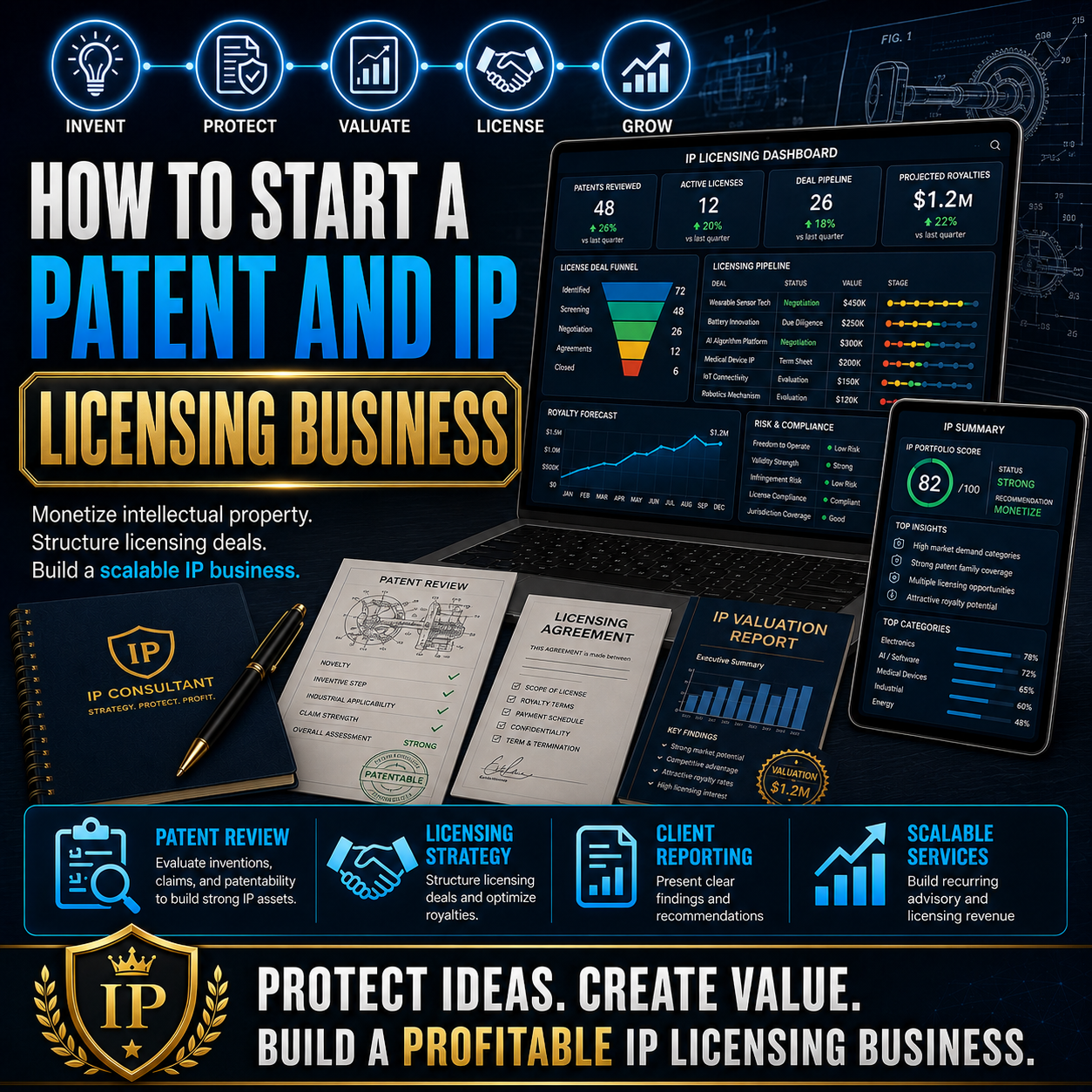
Start a Patent and IP Licensing Business
Evaluate market use and deal readiness alongside technical novelty. Technical founders and inventors exploring commercial licensing may need help with valuable inventions that never reach potential industrial users or licensing negotiations. This course explores how to turn that need into a focused offer clients can understand, evaluate and buy.
Instead of starting with a generic business plan, examine the specialist decisions that shape this kind of venture: prior art, ownership, licensing scope, royalty models and partner selection. Work from a defined customer problem to a practical starter service or product, with realistic delivery boundaries, pricing assumptions and a route to your first market conversations.
What You Will Learn
Focus on the decisions that matter before you launch or expand:
- Identify the commercial problem a protectable invention may solve.
- Structure an initial review of novelty, ownership and competitive alternatives.
- Prepare a nonconfidential technology summary for potential licensees.
- Compare royalties, milestones, exclusivity and field-of-use commercial terms.
- Plan confidentiality, disclosure and specialist patent-adviser involvement.
- Map realistic target partners and a disciplined outreach process.
See How It Works in a Realistic Business Scenario
Consider an engineering inventor assessing whether a novel process improvement could interest an equipment manufacturer. Define the buyer’s desired outcome, the evidence you would need before accepting the work, the smallest credible first engagement and how you would demonstrate progress. Translate the example into a business concept relevant to your skills and local market.
Shape a Sellable First Offer
Use the course concepts to outline a structured technology licensing opportunity assessment with a target customer, scope, key assumptions, indicative price structure and delivery milestones. Decide which parts can be demonstrated with a small pilot and what should be validated through real customer interviews before committing major time or capital.
Your commercial approach should address prior art, ownership, licensing scope, royalty models and partner selection. Patentability and freedom-to-operate questions require qualified legal advice. Clear boundaries make the service easier to explain, price and deliver responsibly.
Who This Course Is For
Designed for inventors, technology founders, product engineers and innovation professionals. It is particularly relevant if you already understand the underlying technical field but want a more structured way to package your expertise, assess business viability and communicate value to prospective buyers.
What You Can Work Towards
Develop a concise launch blueprint for a structured technology licensing opportunity assessment: a defined niche, buyer profile, clear scope, estimated costs, an appropriate pilot or demonstration, a pricing rationale and first outreach steps. Use that blueprint to decide what to validate first and how to present a more credible service to prospective customers.
Take the Next Step
Ready to take your next step? Explore how to position a structured technology licensing opportunity assessment for technical founders and inventors exploring commercial licensing, and develop a more confident, commercially grounded approach to starting your venture.