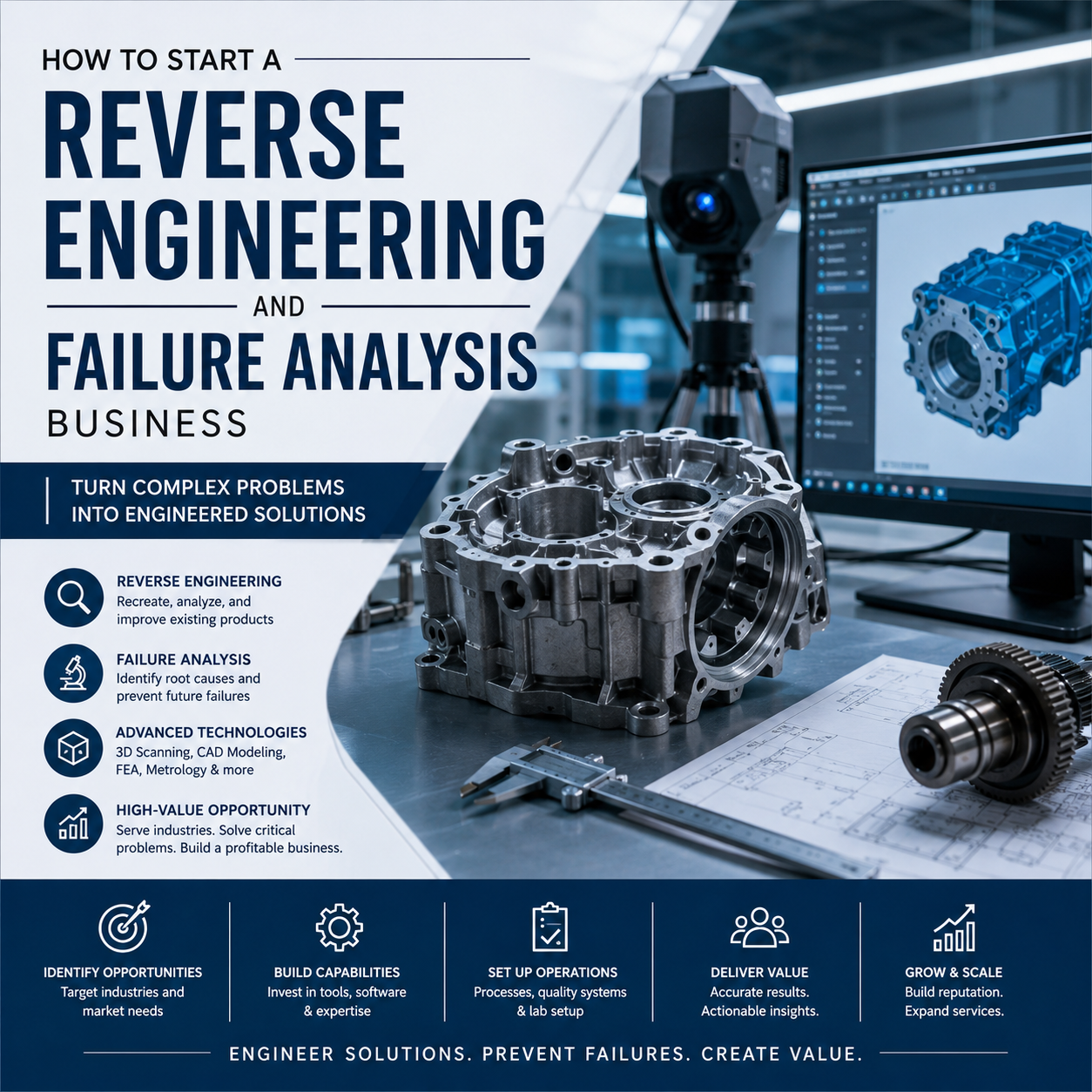
Start a Reverse Engineering and Failure Analysis Business
Sell objective failure evidence and actionable engineering insight. Manufacturers and insurers investigating failed components may need help with repeated failures where the physical root cause is unclear. This course explores how to turn that need into a focused offer clients can understand, evaluate and buy.
Instead of starting with a generic business plan, examine the specialist decisions that shape this kind of venture: evidence handling, metrology, testing, safety, IP and expert reporting. Work from a defined customer problem to a practical starter service or product, with realistic delivery boundaries, pricing assumptions and a route to your first market conversations.
What You Will Learn
Focus on the decisions that matter before you launch or expand:
- Choose a failure-analysis niche aligned with available expertise and equipment.
- Define evidence intake, traceability and non-destructive or destructive test options.
- Plan appropriate measurement, modelling and root-cause investigation methods.
- Present findings with uncertainty, alternative explanations and next steps.
- Estimate lab, equipment, reporting and specialist subcontract costs.
- Build credibility through rigorous sample reports and industrial relationships.
See How It Works in a Realistic Business Scenario
Consider an industrial client seeking to understand why a machined shaft fractured earlier than expected. Define the buyer’s desired outcome, the evidence you would need before accepting the work, the smallest credible first engagement and how you would demonstrate progress. Translate the example into a business concept relevant to your skills and local market.
Shape a Sellable First Offer
Use the course concepts to outline a controlled failure-investigation and engineering report service with a target customer, scope, key assumptions, indicative price structure and delivery milestones. Decide which parts can be demonstrated with a small pilot and what should be validated through real customer interviews before committing major time or capital.
Your commercial approach should address evidence handling, metrology, testing, safety, IP and expert reporting. Expert conclusions must match the available evidence and professional competence. Clear boundaries make the service easier to explain, price and deliver responsibly.
Who This Course Is For
Designed for materials engineers, mechanical specialists, test engineers and experienced industrial consultants. It is particularly relevant if you already understand the underlying technical field but want a more structured way to package your expertise, assess business viability and communicate value to prospective buyers.
What You Can Work Towards
Develop a concise launch blueprint for a controlled failure-investigation and engineering report service: a defined niche, buyer profile, clear scope, estimated costs, an appropriate pilot or demonstration, a pricing rationale and first outreach steps. Use that blueprint to decide what to validate first and how to present a more credible service to prospective customers.
Take the Next Step
Ready to take your next step? Explore how to position a controlled failure-investigation and engineering report service for manufacturers and insurers investigating failed components, and develop a more confident, commercially grounded approach to starting your venture.